
Post #7: A Wave from Brazil
Everyone has to be somewhere, and right now I’m in Brazil. On December 17, after 11 months of anticipation, fear, and sanity questioning, I plunked myself in a plane bound for São Paulo, with a return flight booked for five months later.
I spent the first few days in the megalopolis with friends of friends, a middle-aged couple called Zuleid and Rubens. The days went by in a blur of food, conversation, more food, visits to cultural landmarks, and still more food. Zuleid, a self-confessed fruit freak, had juicy Braz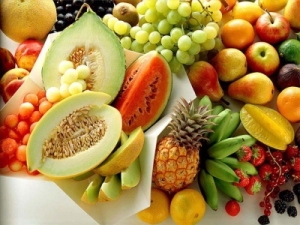 ilian fruits all over the house and I got to try them all: maracujá, guaraná, cupuaçu, goiaba, abacaxi, their tastes as exotic as their names.
After studying Brazilian Portuguese in a disorganized manner for 11 months, with never more than an hour of conversation at a stretch, I was now thrown into an all-Portuguese environment. I had not only to listen, but to answer. By the end of each day my brain cells were crying, but there’s nothing like total immersion to bring you up to speed.
On December 21 I bade my hosts goodbye and moved on to Florianópolis, the city I’ll be calling home for the next five months. That’s when the reality of this venture hit me. Meals were no longer materializing on the table. Steaming coffee was no longer within arm’s reach. The adaptor I had bought in Toronto was the wrong size, and if I didn’t find another one in a hurry my cell phone and computer would run out of power within hours. Three hardware stores later I was approaching panic, when a nice man with a workshop and hacksaw fashioned the requisite item for me.
The Airbnb room I had rented measured less than 50 square feet, and I was well and truly on my own. I ached for my family. Never mind that I had chosen to take this solo trip at age 60—to experience, for probably the last time before I died, the type of cultural immersion that had rocked my world in Japan. I still ached for them.
But the mountains! The ocean! You’re never far from either in this city, known to Brazilians as the “island of magic.” While Florianopolis (handily shortened to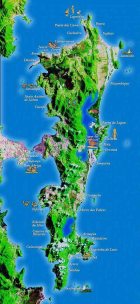 Floripa) is a state capital and has close to half a million people, it’s more a collection of small towns than a standard city, thanks to said mountains. With forty-two gracefully curved beaches, a salt-water lagoon, sand dunes, one of Brazil’s largest universities, restaurants to suit every palate, flashy bars, and old fishing villages dating from colonial days, the island has enough variety to sustain a lifetime of exploration.
But I wouldn’t get to enjoy any of it unless I pushed myself. Unless I risked falling flat on my face. Well, I had plenty of experience in that department. Face-plants it would be, then.
Within a week of arrival I had an invitation to a beach and to a bar, where a local Samba band stole my heart. “Nas coisas do amor, temos que cuidar, mas não cuidar demais,” the lead singer crooned. In matters of love, we have to be careful, but not too careful.
She might as well have been singing about travel.
#solotravel #sixtyplus #portuguese #florianópolis #brazil #brasil


 even though my Spanish was more than rusty and everything I said came out as Spantuguese. As it turned out, I still knew enough of the language to fend off an old man (you know, someone in his sixties) who insisted on showing me “the great view” from his apartment.
 This wouldn’t have happened to me at thirty. Or forty. Or fifty-nine. There’s no escaping it: it’s the beginning of the big biochemical blowout, the synaptic switch-off, the slide into vacant-eyed oblivion. By the time I get to Brazil I’ll probably have no words left, just chin hairs and missing teeth.
 packaging and settled in for a good brain sweat. And then I read the first sentence: “Professor Dr. Moritz-Maria von Igelfeld often reflected on how fortunate he was to be exactly who he was, and nobody else.” This was not a book about Portuguese irregular verbs, this was a novel. Oops.
 When he wasn’t writing treatises, Professor von Igelfeld spent his time flitting from one conference to another, where the four or five people who attended his lectures hung on to his every word. Wherever he went, disaster followed: he ordered the wrong dish, offended a hotel clerk, or missed a chance to marry a woman because his best friend proposed to her a day earlier. Never one to dwell on might-have-beens, Professor von Igelfeld took solace in the thought that his magnum opus would grace scholars’ bookshelves long after his death. By the end of the book, I wanted to give the guy a hug.
 would clear up my confusion. If nothing else, I hope that a philologist just like him will one day write a book just like his, though I’m not sure 1,200 pages would cover the topic.
 me a spot, even though I hadn’t applied.
 think of in 60 seconds. I hadn’t been to a zoo since my kids were in diapers, but how hard could this be? The first few animals rolled easily off my tongue: lion, tiger, cheetah, polar bear… then a little imp flipped a switch in my brain and all I could picture were farm animals: chickens, turkeys, sheep. What the hell was going on?
 hen a few more. I never doubted that Greek and Greece would work for me. The language seemed suitably challenging, and what’s not to like about feta cheese and ouzo on a cliffside patio in Santorini?
 Talk about embarrassed. I had paid for a Gone Greeking blog site! A domain name! From Greek to Portuguese, Greece to Brazil—surely people would find me capricious and random. They would snicker as they waited for me to ditch Portuguese and take up Swahili or Djinang.
 Gabrielle Bauer